

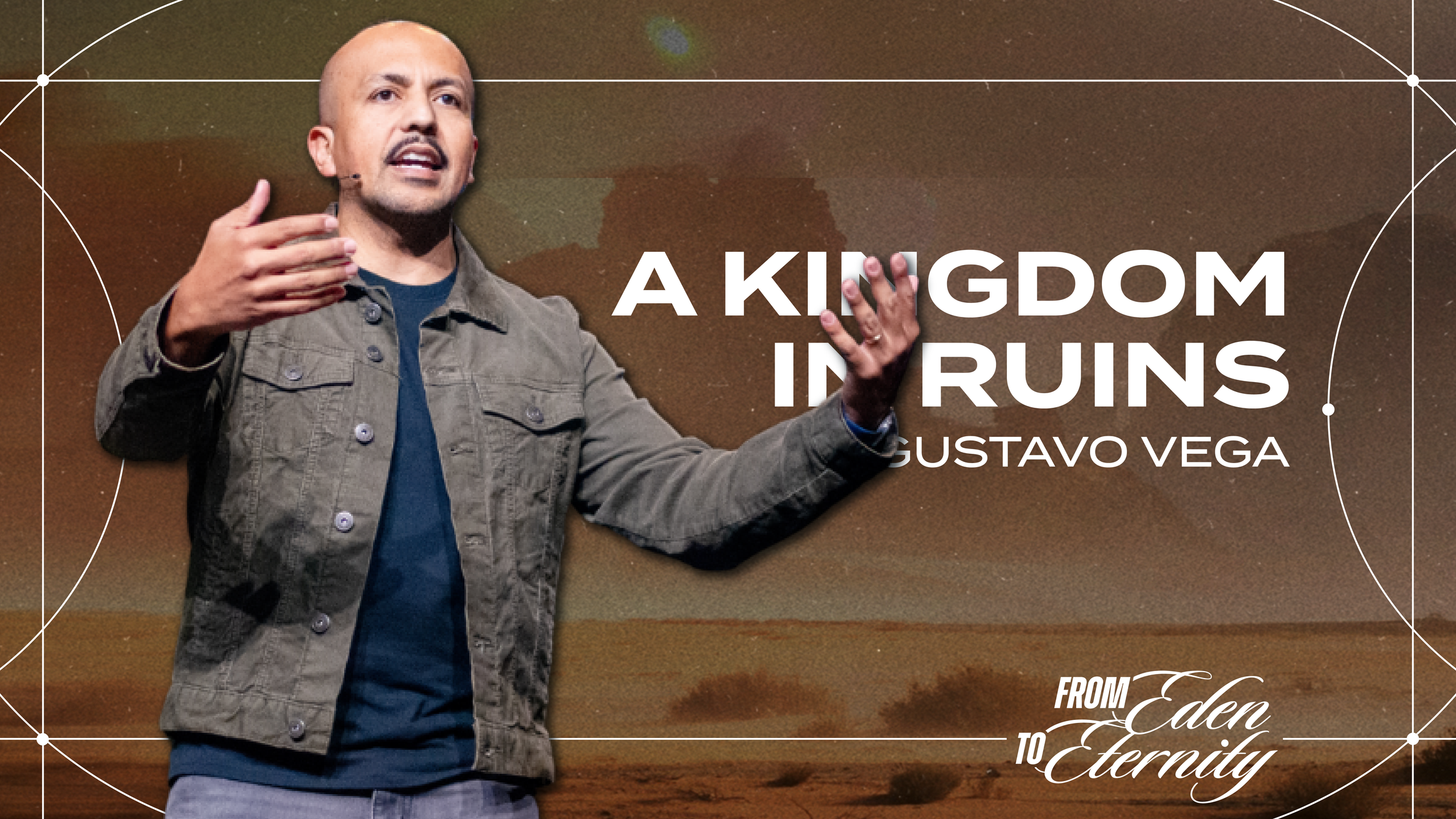
Small Compromises, Big Consequences: What the Book of Kings Teaches Us About Faith
Most people skip First and Second Kings. The long lists of names, dates, and royal evaluations can feel disconnected from everyday life. But buried in those 47 chapters is one of the most relevant warnings in all of Scripture: the road from rescue to ruin is not made by one big decision, but by small, daily compromises.
Why Does the Book of Kings Even Matter?
First and Second Kings was originally one book, split into two simply because the scroll wasn't long enough. It was written to answer one haunting question from a people in exile: Why did this happen to us?
How did a nation that experienced God's miraculous rescue, His provision, and His presence in a magnificent temple end up conquered, scattered, and broken?
The answer, repeated throughout every chapter, is not that God failed them. It is that they failed God, one small compromise at a time.
The Pattern of Compromise: How It Starts
Compromise Begins With a Shift in What You Love
The story starts with Solomon, Israel's wisest and most celebrated king. His downfall didn't begin with a dramatic rebellion. It began quietly, with his affections drifting.
"King Solomon, however, loved many foreign women... They were from the nations about which the Lord had told the Israelites, 'You must not intermarry with them, because they will surely turn your hearts after their gods.' Nevertheless, Solomon held fast to them in love." - 1 Kings 11:1-2
This wasn't simply about romance. These marriages represented political alliances, power, and status. Solomon loved what those relationships gave him more than he loved the Lord. And over time, that misplaced love led him to worship other gods entirely.
Here is the sobering truth: nine times out of ten, your life will follow not what you know, but what you love. Compromise always begins with a slow shift in affection, not a sudden change in behavior.
Compromise Makes Obedience Negotiable
One generation after Solomon, the kingdom split in two. The northern kingdom of Israel got a new king named Jeroboam. He faced a practical dilemma: if he let the people keep traveling to Jerusalem to worship, would they eventually shift their loyalty back to the southern kingdom?
His solution was subtle and dangerous.
"After seeking advice, the king made two golden calves. He said to the people, 'It is too much for you to go up to Jerusalem. Here are your gods, Israel, who brought you up out of Egypt.'" - 1 Kings 12:28
Notice what he did not say. He didn't say, "Let's worship new gods." He said, "Let's worship God, just differently. More conveniently. Right here." He modified God's instructions to make obedience easier and more comfortable.
That is exactly what compromise does. It doesn't always look like outright rebellion. It often looks like choosing fear over trust, or convenience over faithfulness.
Compromise Never Stays Put
Once you remove God's word as the final authority in your life, the standards keep shifting. What started with Jeroboam tweaking worship rules eventually led, 70 years later, to 850 prophets of false gods operating openly in Israel.
Compromise follows a predictable path:
A single decision
That decision becomes a pattern
The pattern becomes a practice
The practice becomes a culture
The culture becomes the new normal
What one generation tolerates, the next generation normalizes. This is why what we allow in our own lives matters far beyond just ourselves.
What Does God Say About Wavering Between Two Opinions?
The prophet Elijah confronted this drift head-on. Standing before King Ahab, 850 false prophets, and all the people of Israel, he issued one of the most direct challenges in the entire Bible.
"Elijah went before the people and said, 'How long will you waver between two opinions? If the Lord is God, follow Him. But if Baal is God, follow Him.' But the people said nothing." - 1 Kings 18:21
Elijah rejected middle ground completely. And the people's silence was itself an answer. Not choosing is still a choice.
The invitation here is clear: stop limping between two directions. Decide who you are following and live like it.
Is It Ever Too Late to Turn Back?
The Story of Josiah: Revival Is Still Possible
About 230 years after Jeroboam, a young king named Josiah came to power in Judah. He was described as a man who followed God with his whole heart, like His ancestor David. He began restoring the temple, and during the renovation, workers discovered a copy of God's law that had been sitting in a dusty room, forgotten.
When it was read aloud to Josiah, he was broken and convicted. He didn't just hear it. He acted on it.
"The king stood by the pillar and renewed the covenant in the presence of the Lord to follow the Lord and keep his commands, statutes and decrees with all his heart and with all His soul." - 2 Kings 23:3
From that moment, revival spread. Idol worship was torn down. The Passover was celebrated in a way it hadn't been in hundreds of years. It all started by opening his heart to the word of God and then doing what it said.
There is a difference between knowing God's word and doing it. Many of us already know what God is asking of us. The step we are avoiding is simply obedience.
What Happens When Compromise Goes Unchecked?
Just 30 years after Josiah's revival, the consequences of generations of compromise finally arrived. The Babylonian army came to Jerusalem, burned the temple to the ground, tore down the city walls, and took the people into exile.
"He set fire to the temple of the Lord, the royal palace, and all the houses of Jerusalem. Every important building he burned down." - 2 Kings 25:9
The temple that David dreamed of, that Solomon built with joy, where God's presence had come down in glory, was gone. That is what unchecked compromise eventually produces.
Does God Abandon Us When We Fail?
The Surprising Ending of the Book of Kings
The Book of Kings does not end in total darkness. In its final verses, something unexpected happens. Thirty-seven years into exile, the last surviving king of David's line, Jehoiachin, is released from prison and given a seat of honor at the king's table.
"He spoke kindly to him and gave him a seat of honor higher than those of the other kings who were with him in Babylon... Day by day the king gave Jehoiachin a regular allowance as long as he lived." - 2 Kings 25:28-30
This is not a footnote. This is the point. In the middle of exile and ruin, God's promise to David's line was still alive. The lamp had not gone out.
"Nevertheless, for the sake of his servant David, the Lord was not willing to destroy Judah. He had promised to maintain a lamp for David and his descendants forever." - 2 Kings 8:19
Our choices carry real consequences. But our failure does not cancel God's faithfulness. He is still moving, still keeping His promises, even when we cannot see how.
Life Application
The Book of Kings is not just ancient history. It is a mirror. The same slow drift that destroyed a nation can quietly happen in a marriage, a family, a career, or a walk with God.
This week, ask God to show you one stone of compromise in your life. Not a dramatic cliff, but a small, slippery stone you have been stepping over without thinking. Then take one step in the right direction. That might look like:
Confessing something you have been avoiding
Opening your Bible on your own without anyone prompting you
Starting your day in prayer before anything else
Having a hard conversation you have been putting off
Setting a boundary you know God has been calling you to set
Ask yourself these questions as you reflect this week:
Where are my affections right now? What do I love more than I love God?
Is there an area of my life where I have made obedience to God negotiable or convenient?
What is one thing I already know God is asking me to do that I have not yet done?
Am I wavering between two directions, and what would it look like to fully choose God in that area?
Even if compromise has taken root, Josiah's story proves that revival is still possible. It starts with opening your heart to God's word and taking one step of obedience. God is faithful. His promises outlast our failures. And He is still offering a seat at the table.